001
Conversations Module: Closing the Loop on Goal Progress
Projects
Conversations Module: Closing the Loop on Goal Progress
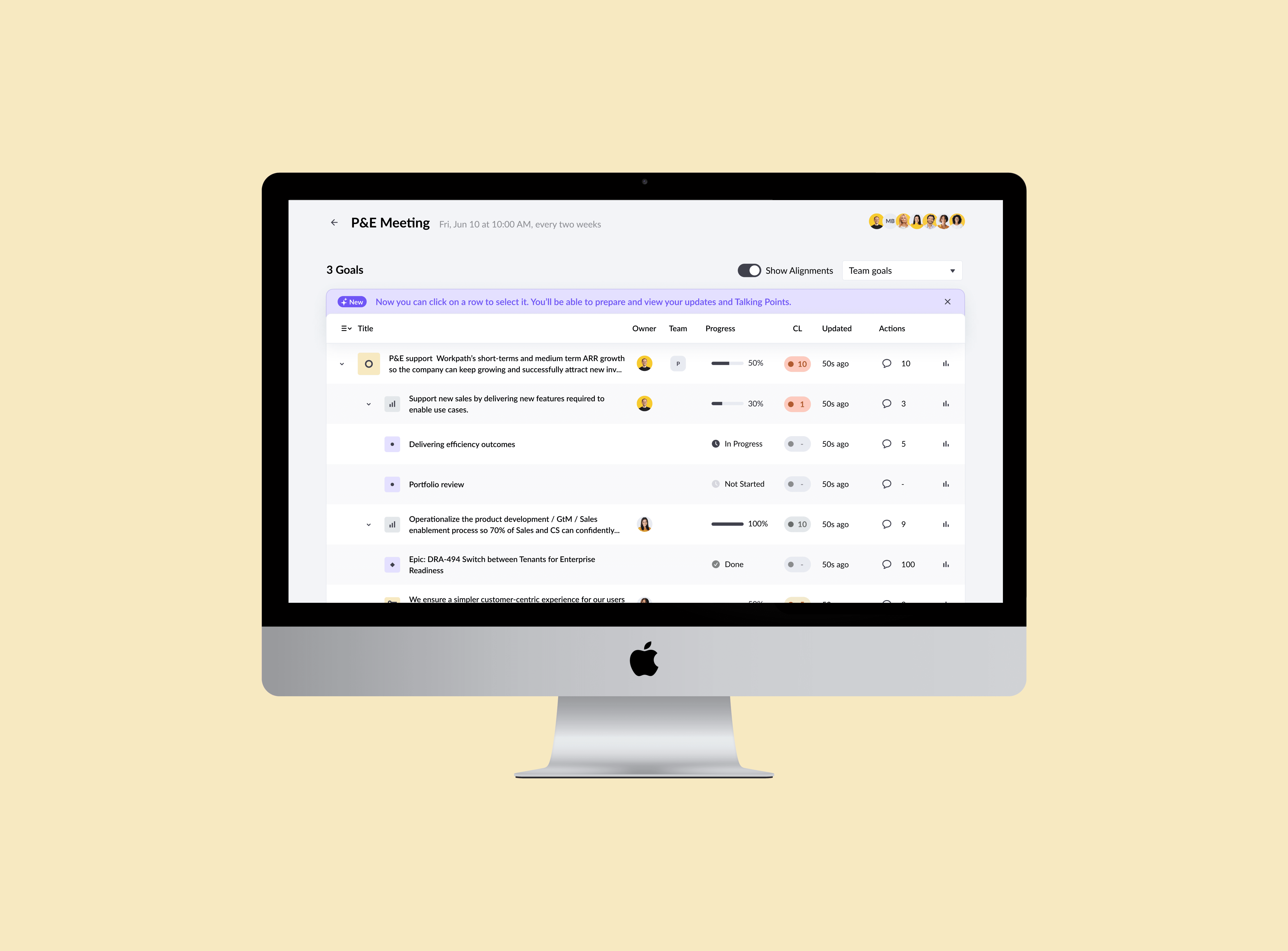
Workpath is an enterprise SaaS platform helping organizations adopt OKRs. While teams could set and track objectives, ongoing alignment between managers and employees was inconsistent. The Conversations module aimed to close this gap by embedding structured, guided check-ins directly into the platform.
Goal
Enable teams to maintain alignment mid-cycle by improving visibility, structure, and accountability within 1:1 and team check-ins.
Year
Client
Workpath
Role
Staff Product Designer
(Impact)
Q4 '22 - Q2 '23 (Closed Beta rollout)
🚀 Validated adoption and engagement within pilot enterprise accounts.
Metric | Before | After | Change |
|---|---|---|---|
Weekly active users | 94 | 250 | +166% increase |
Retention | 24% | 35% | +11 percentage points |
Talking Points per active user | 2.3 | 3.0 | +30% |
Within the closed beta, weekly active users grew from 94 → 250 (+166%), confirming adoption of structured check-ins among early enterprise customers. Retention increased by 11 percentage points (24% → 35%), and users created 30% more Talking Points per week, signaling deeper engagement with OKRs.
These results validated the redesign’s value ahead of the full rollout to Workpath’s broader customer base.
(The Challenge)
Workpath helped organizations define what to achieve, but not how to stay aligned while doing it.
Teams often set ambitious OKRs but lacked a shared understanding of progress throughout the cycle. Performance reviews became retrospective rather than ongoing. Managers wanted more transparency, and employees wanted clearer feedback loops.
(Problem)
Our users struggled to understand the true status of their OKRs.
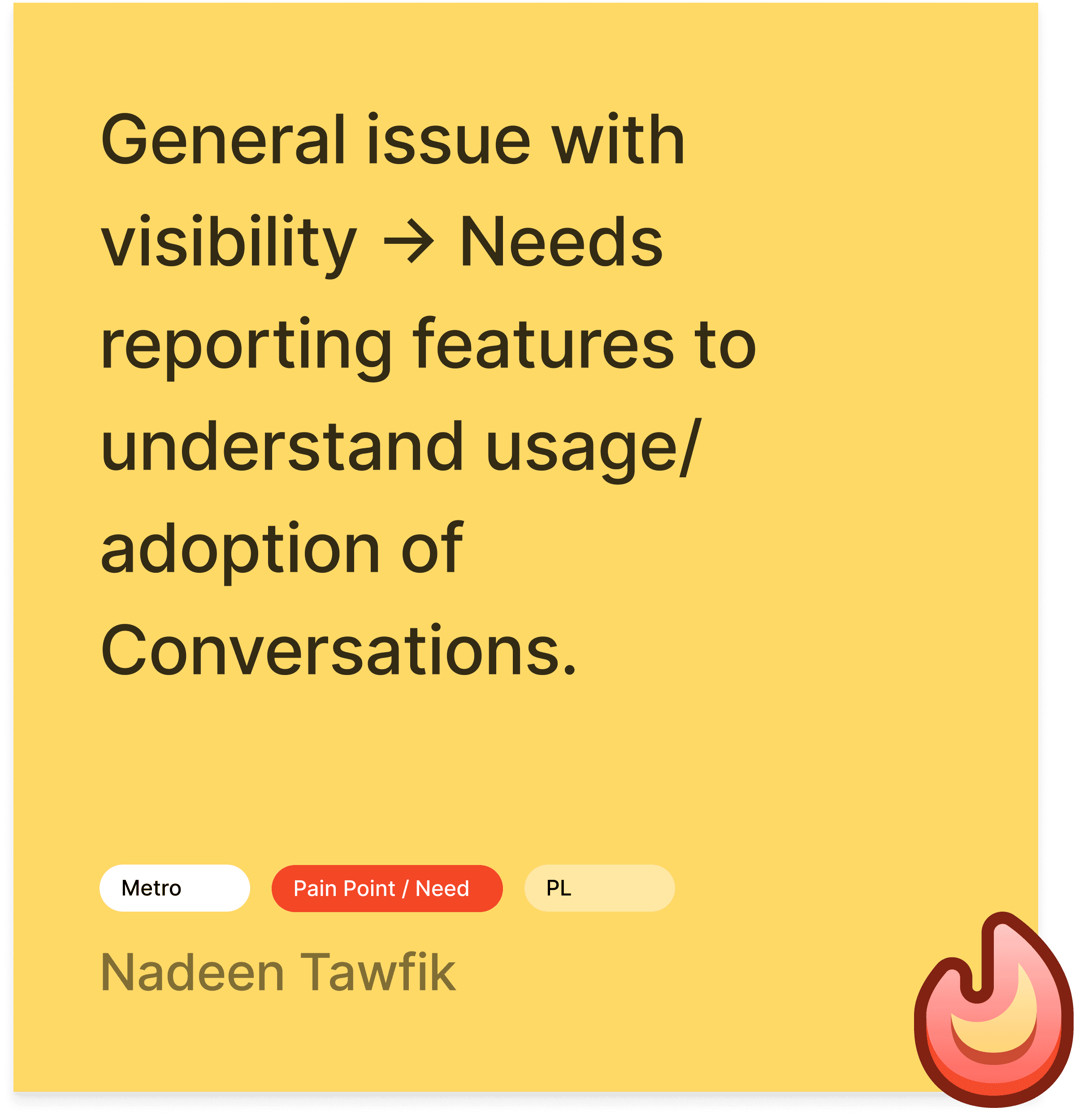
Executives and managers lacked visibility into the true progress of their OKRs. Reporting was scattered across tools, and check-ins were inconsistent. This made it difficult to course-correct early or confidently report progress to leadership.
Key gaps identified:
No visibility into whether goals were on track during a cycle
1:1 conversations lacked structure and consistency
Progress updates were scattered across tools and meetings
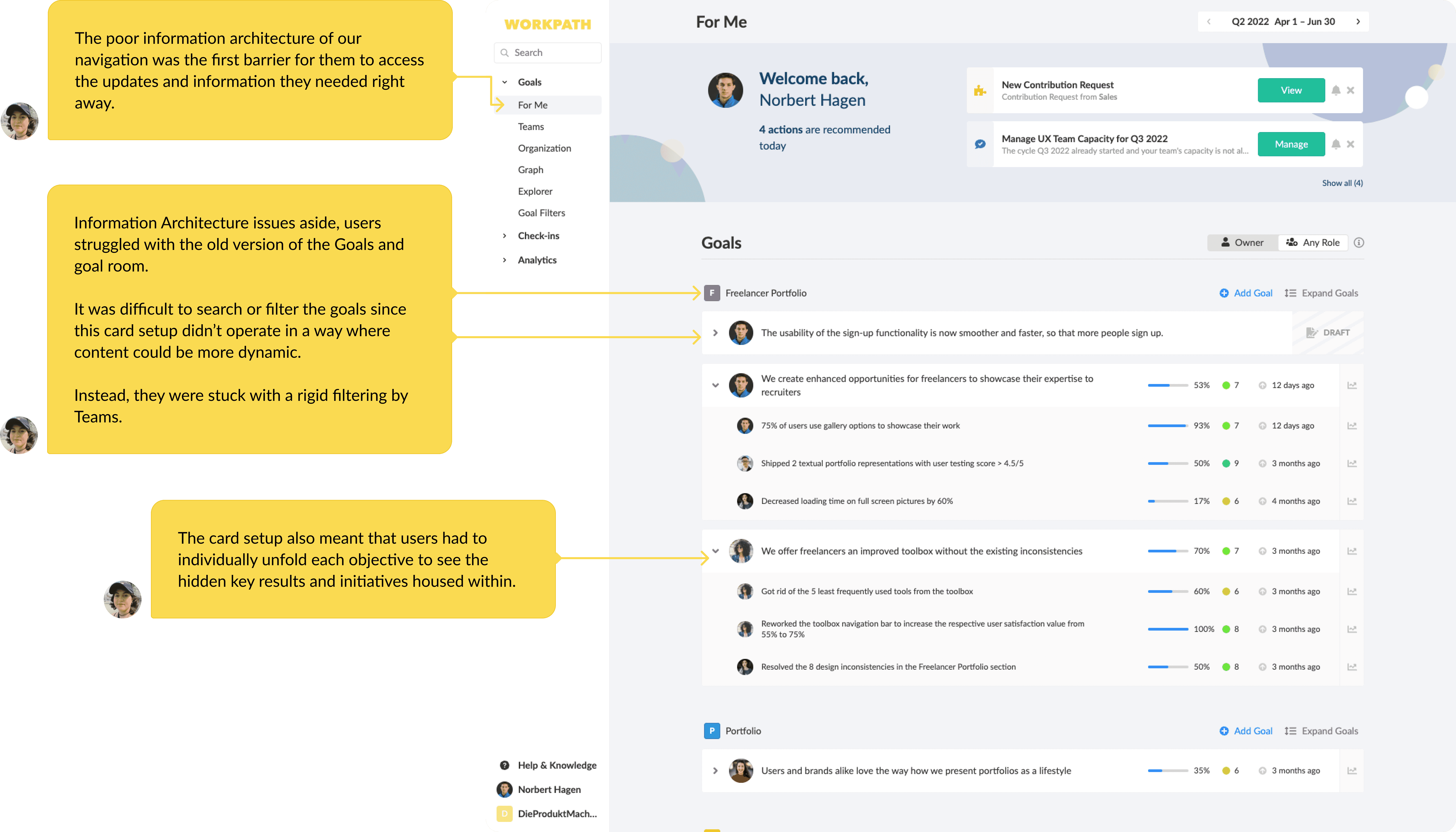
[Legacy "Goal room" screen — The main view for OKRs.]
(Research & Insights)
Why are teams unable to report effectively despite having a solid grasp of OKR methodology?
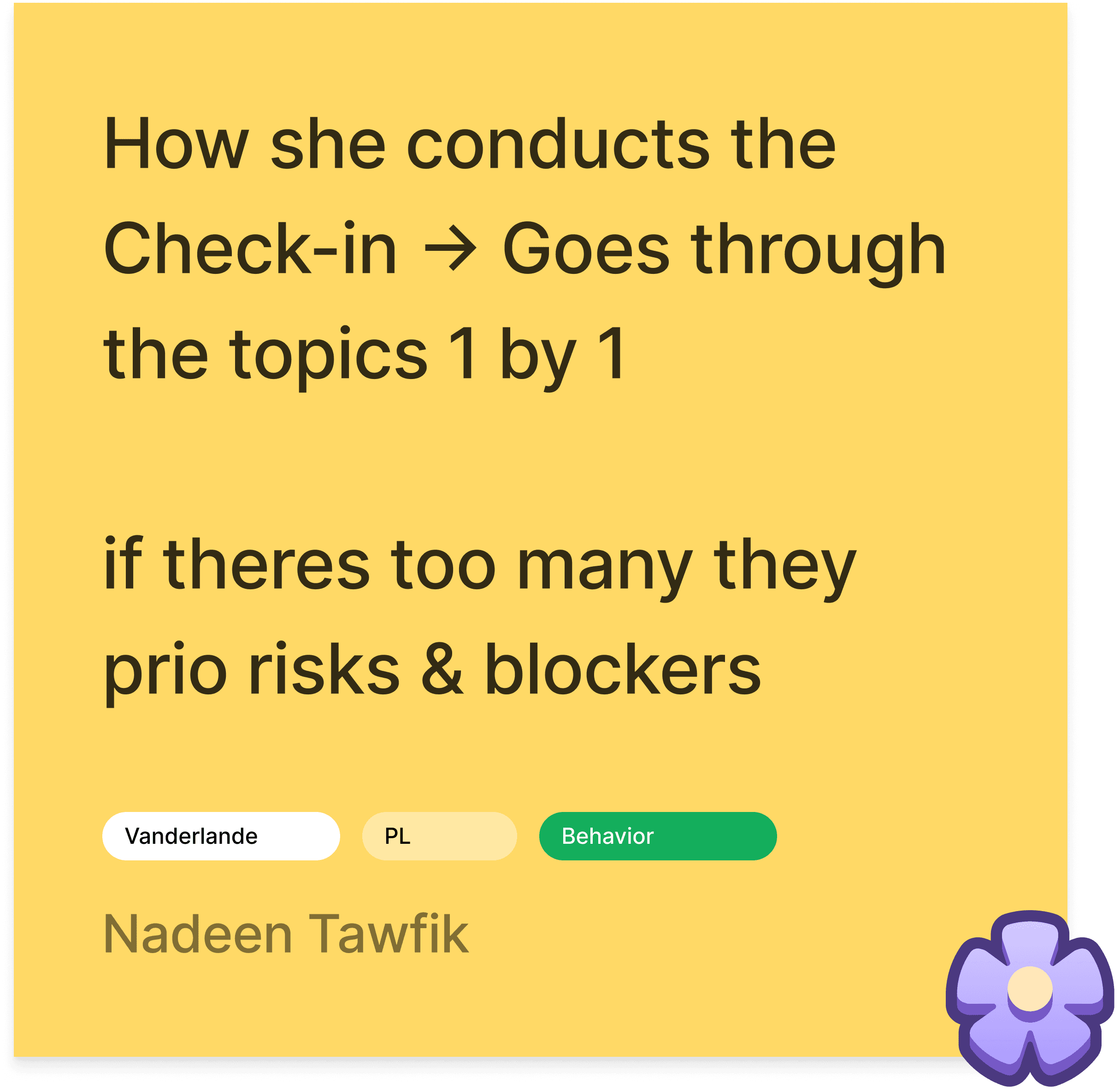
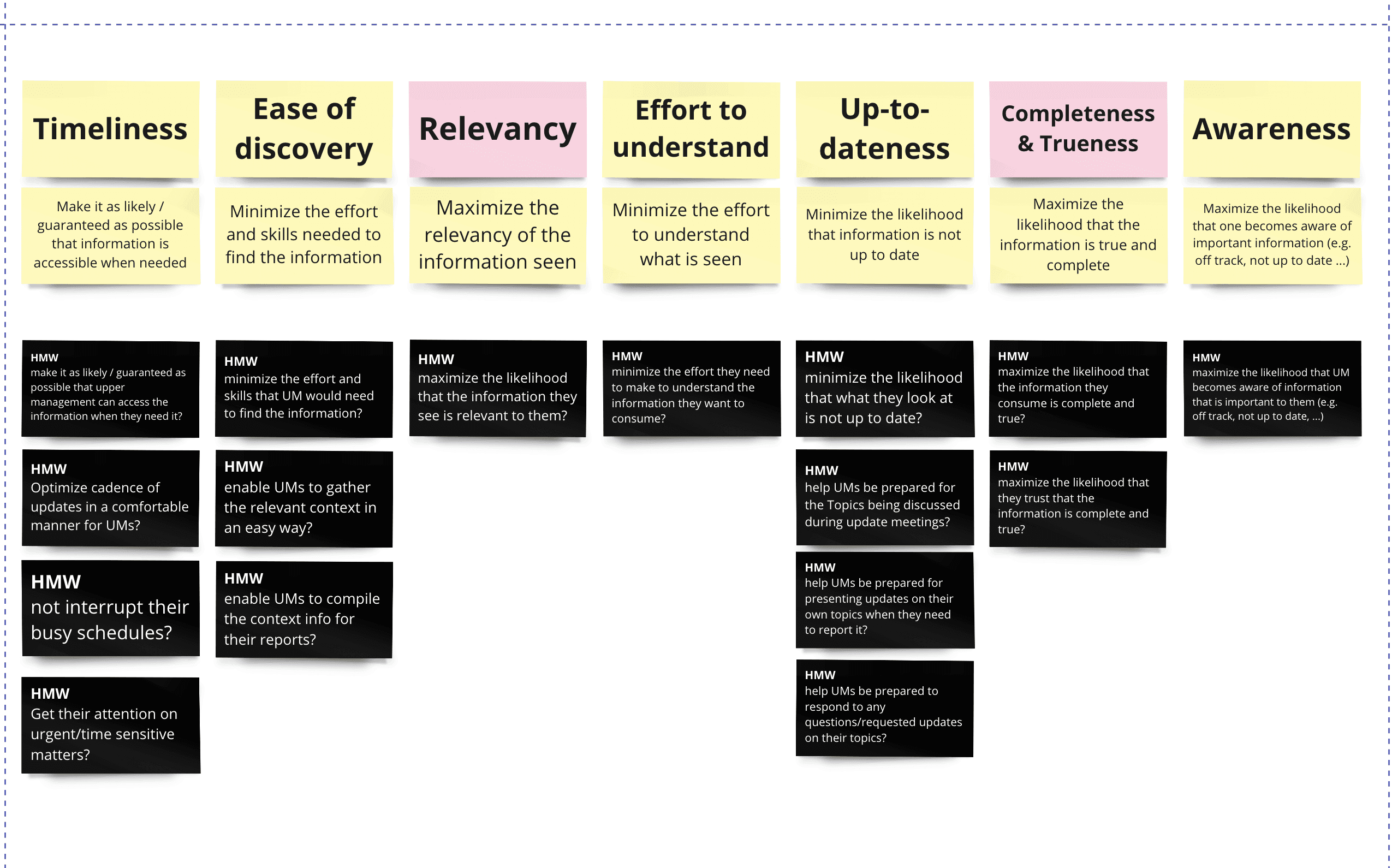
Together with the PM, I embedded qualitative research cycles into our sprints. We combined user interviews, feedback sessions, user observations, and usability testing to get a holistic understanding.
Key insights:
Accountability gaps: Employees weren’t clear on what to report or when.
Manager burden: Conversations varied widely in quality and depth.
Disconnected tools: Updates in spreadsheets, Slack, and meetings never fed back into our platform.
Our research revealed a crucial gap: the product’s check-in experience didn’t reflect our own recommended methodology. We needed to redesign the flow to reinforce the structure we were already teaching our customers.
(Solution)
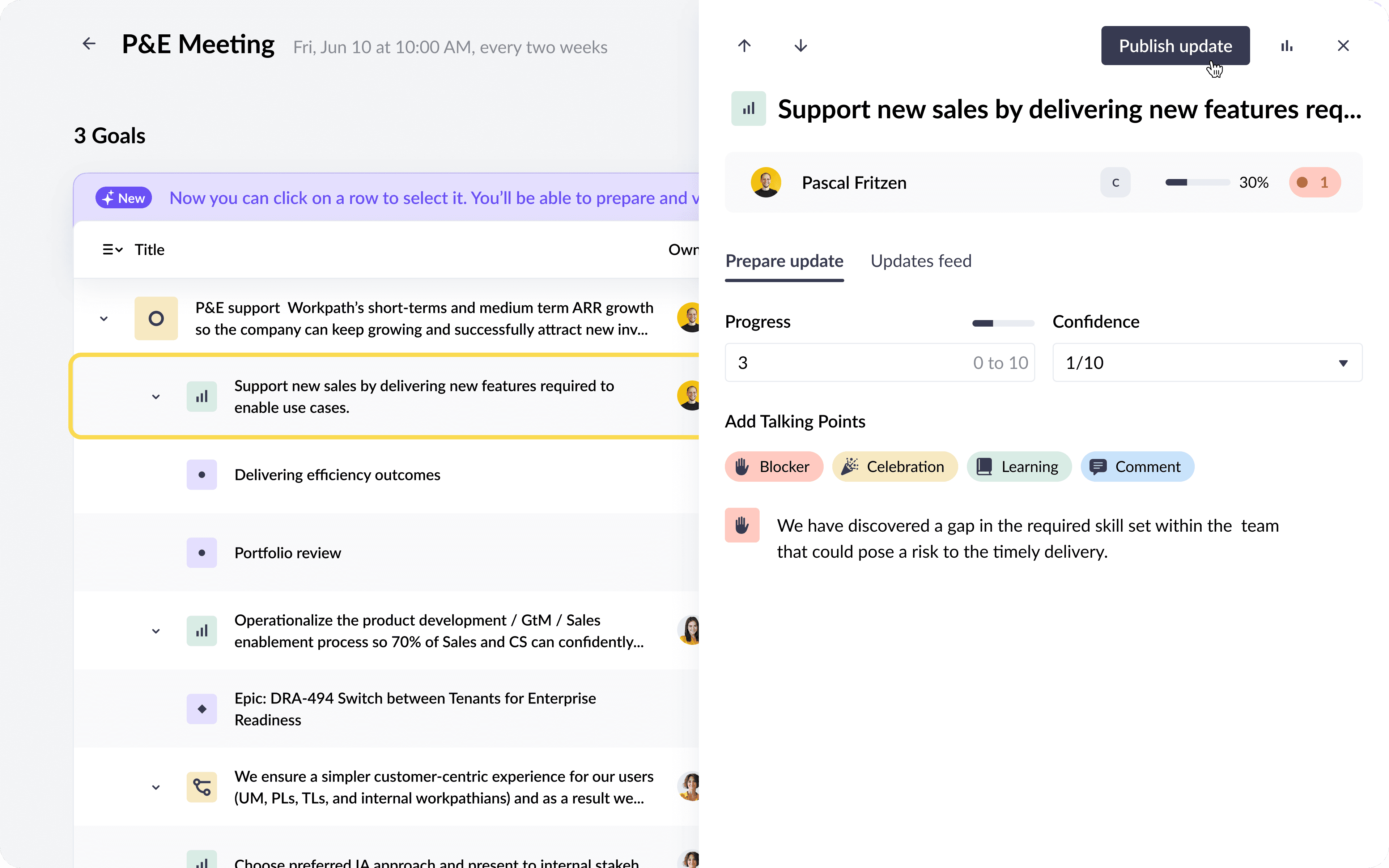
Step 1: Focusing teams on the right conversations.
The first step was helping teams discuss OKRs, not tasks.
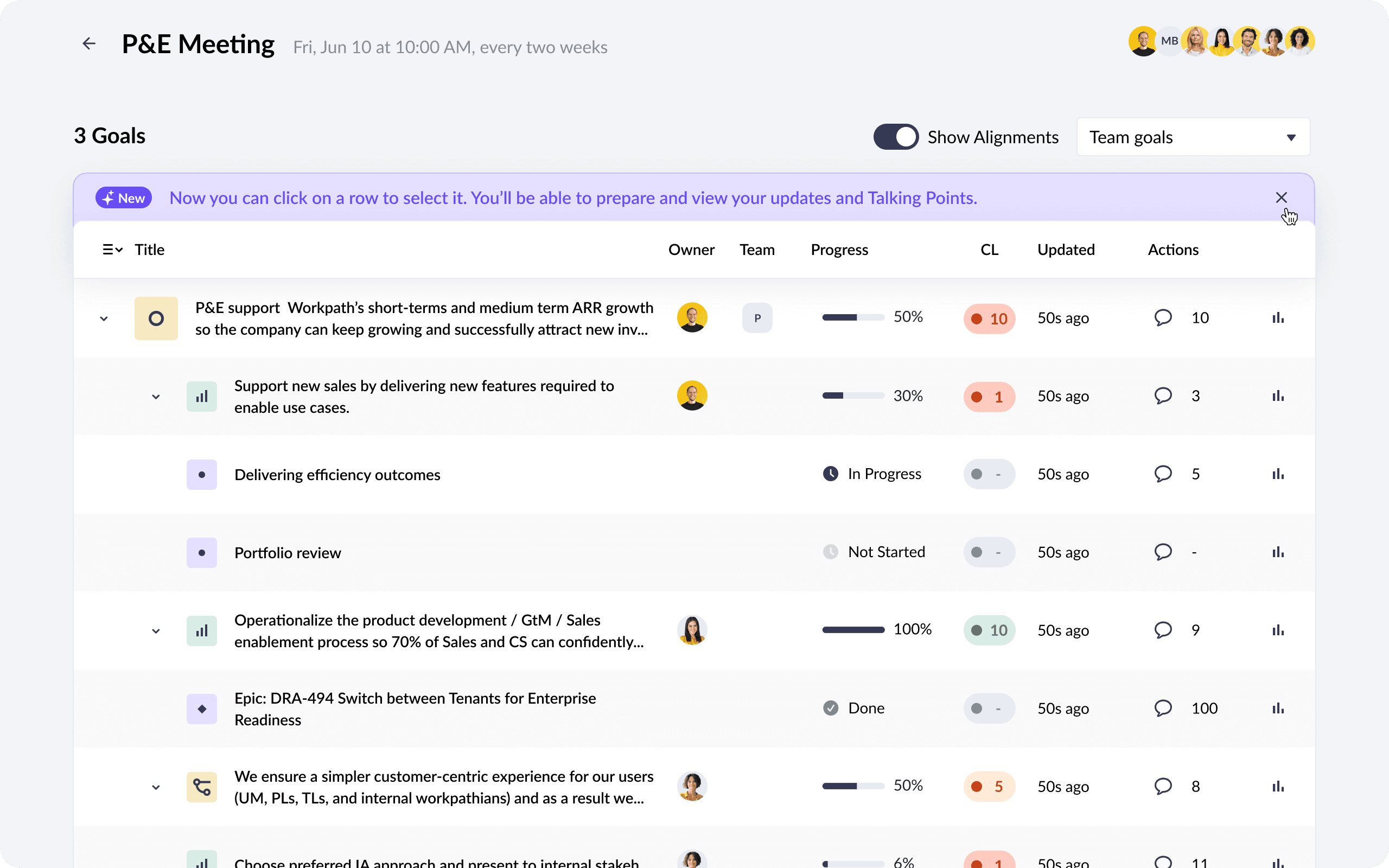
I redesigned the existing module using our Datagrid component to display selected OKRs and their current status as part of the check-in agenda.
Design decisions:
Omitted global navigation on the detail screen and replaced with back button to reduce distractions
Improved Datagrid component usability to support deeper and more flexible drill-down into OKR levels
Reduced cognitive load by keeping only essential elements on screen
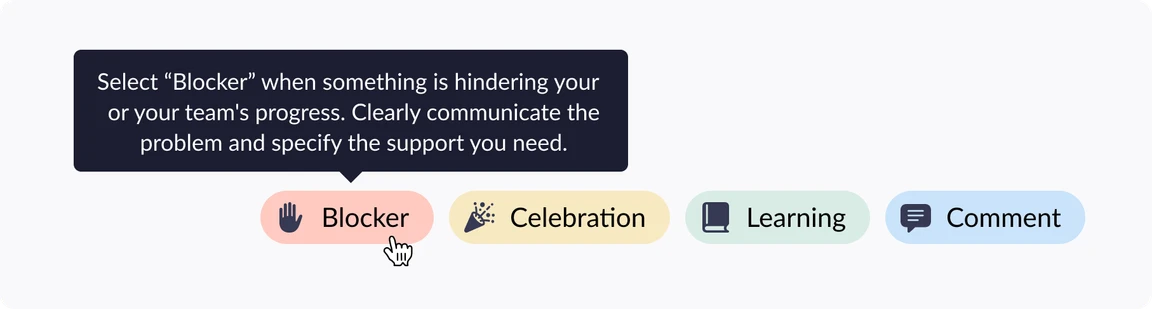
Step 2: Guided "Talking Points" for strategic updates.
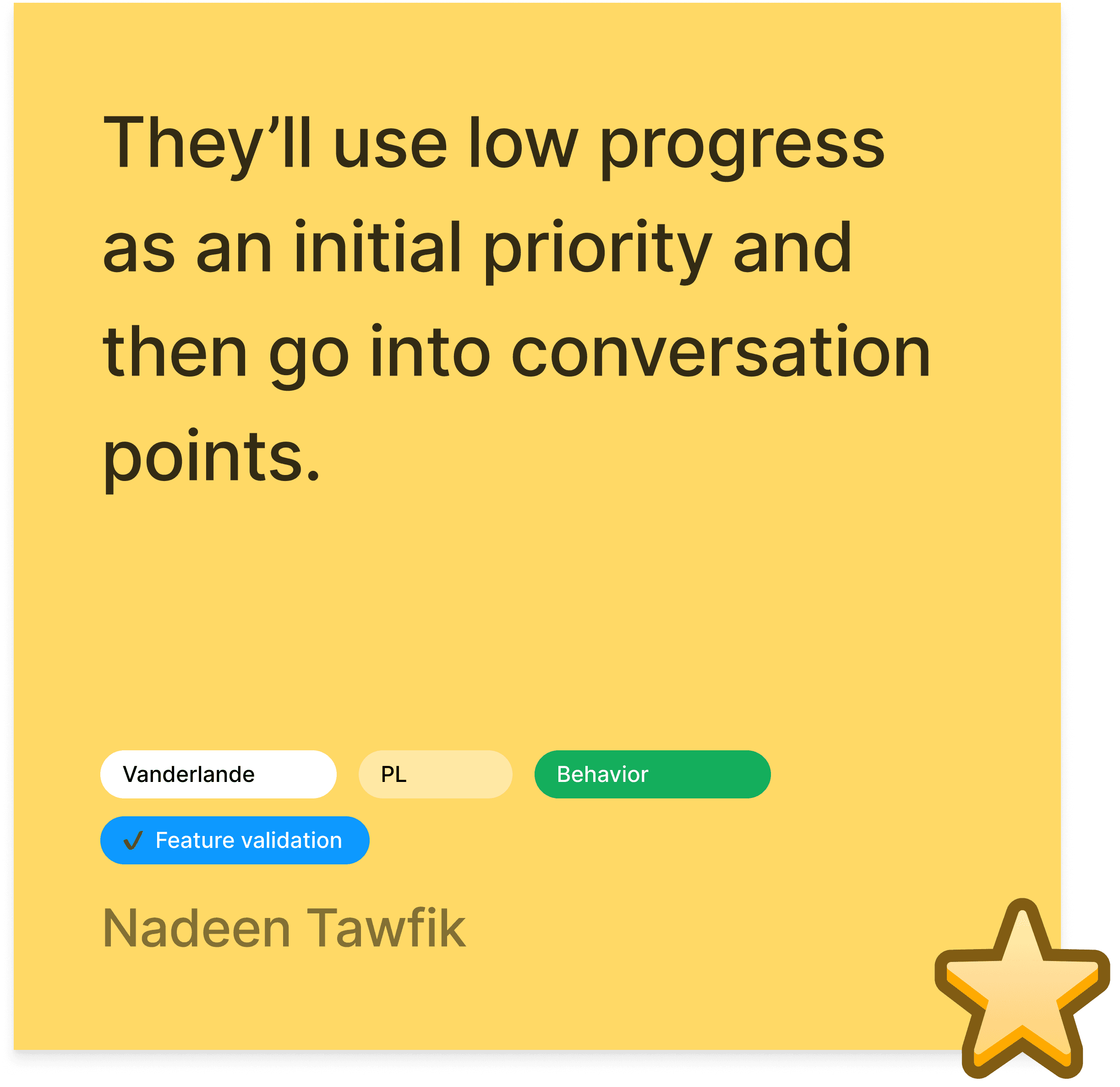
Teams needed guidance on writing relevant updates. I introduced Talking Point categories with inline guidance text to steer users toward strategic reporting instead of operational chatter.
Design decisions:
Limited categories to improve clarity and focus
Allowed updates across all entity levels (Objectives, Key Results, Initiatives, Aligned Goals)
Clarified intent and context for each Talking Point to improve reporting quality

Step 3: Making Talking Points transparent across the platform.
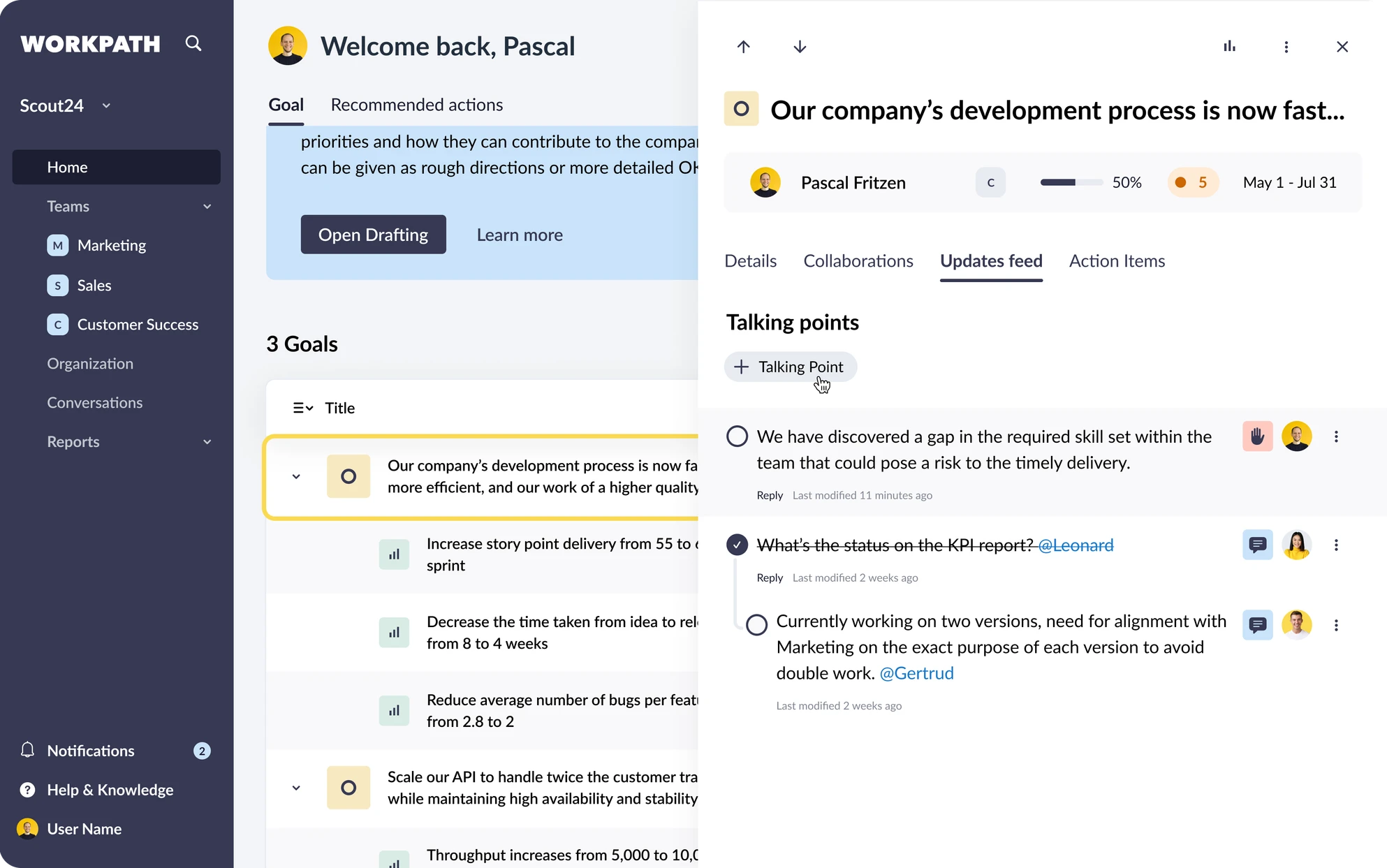
Previously, check-in data was siloed within the module. I proposed linking outcomes of conversations back into the broader OKR framework through a new “Updates Feed” tab visible across Datagrid instances.
Design decisions:
Exposed conversation data beyond the module
Enabled company-wide visibility into check-in discussions and progress updates
(Limitations)
Our small team faced significant engineering constraints.
Developers preferred investing their time in lasting code rather than quick prototypes.
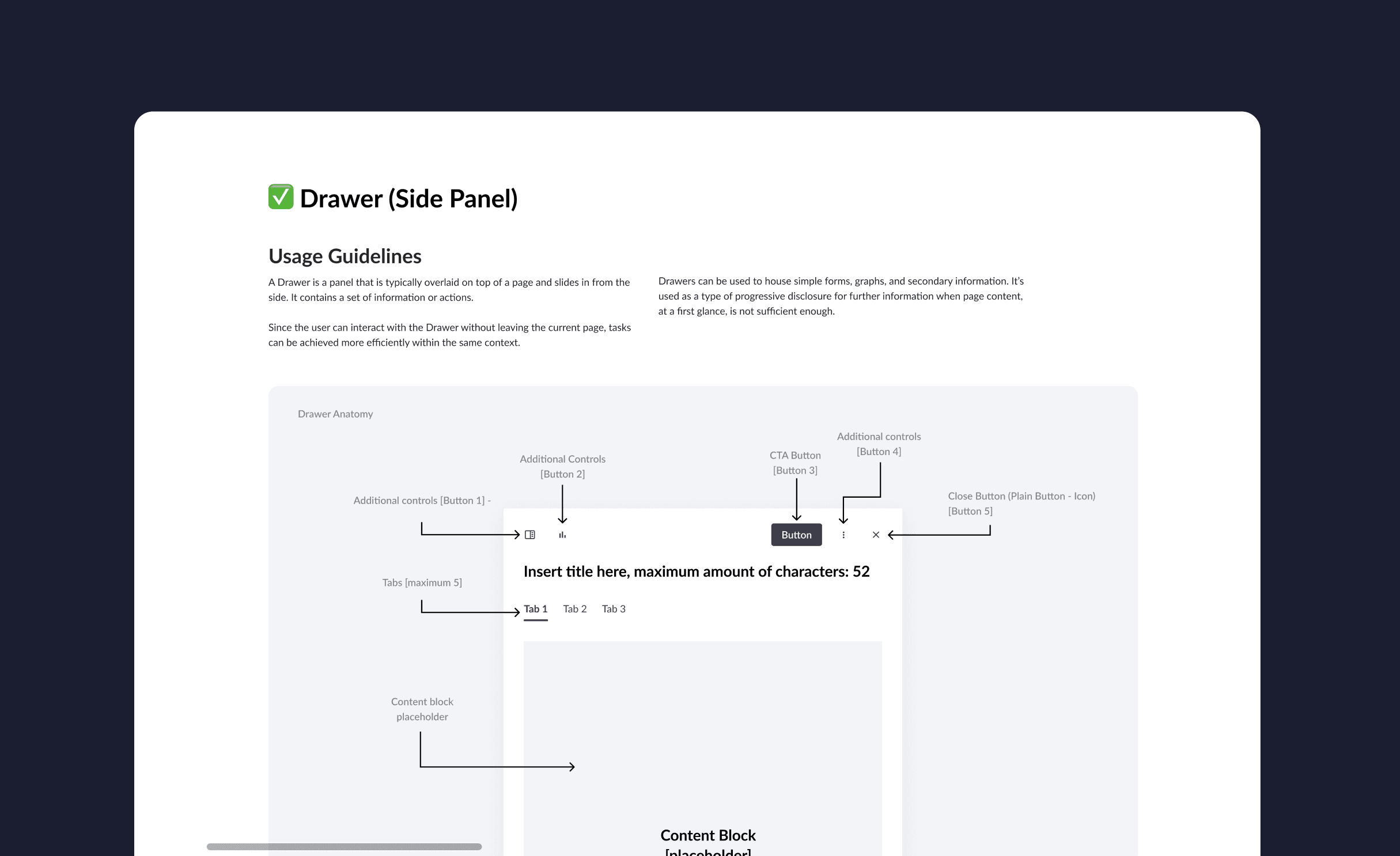
To balance speed and scalability, I proposed leveraging our design system component library for rapid iteration. This approach allowed us to build testable experiences faster while also improving the neglected design system.
This strategy later evolved into my role as primary stakeholder of the company’s design system initiative, a scalable outcome that extended beyond this project.
(Future opportunities)
After improving communication, the next step was turning insights into actions.
I explored concepts such as:
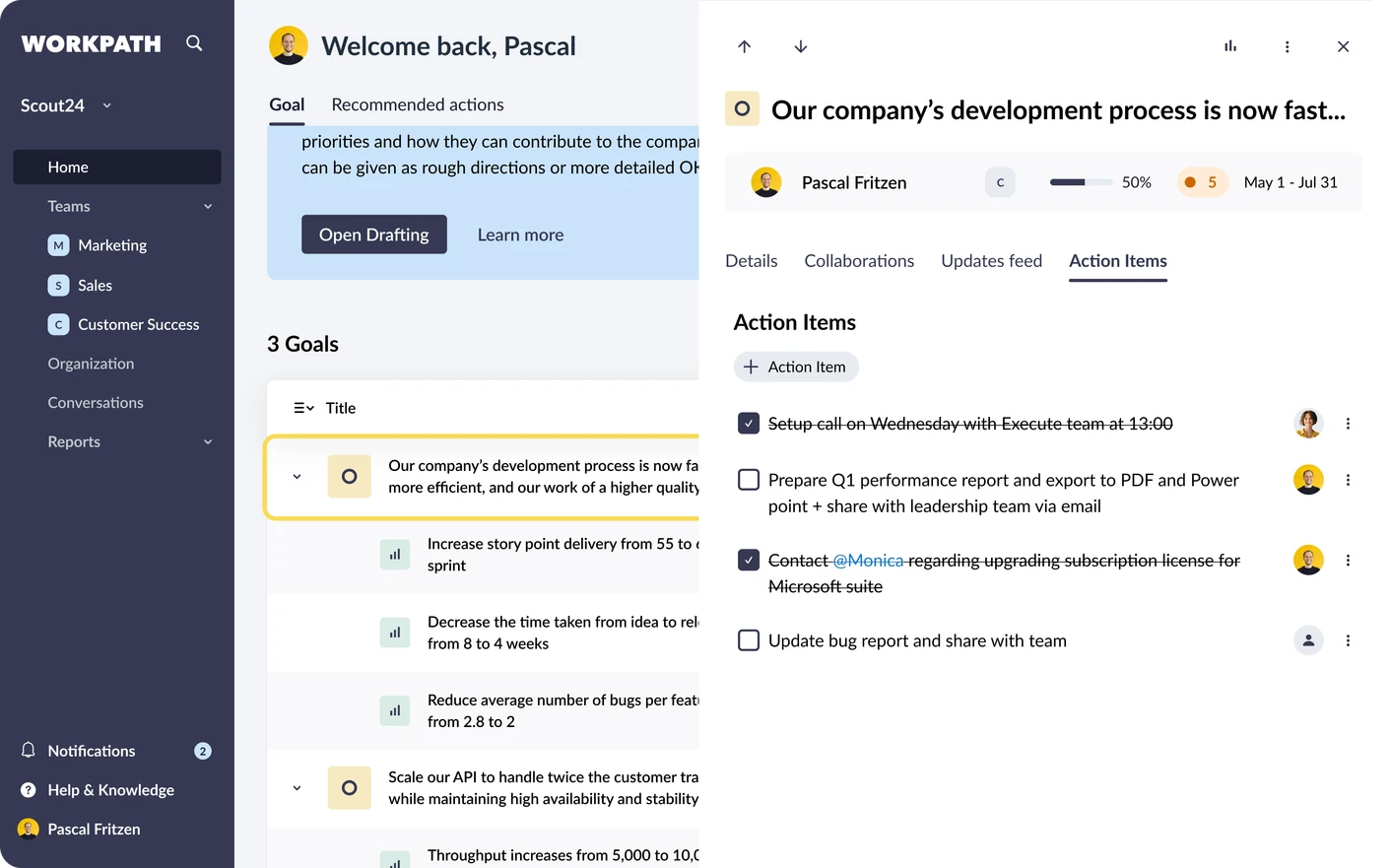
Action Items: enabling teams to assign, track, and close follow-ups after check-ins.
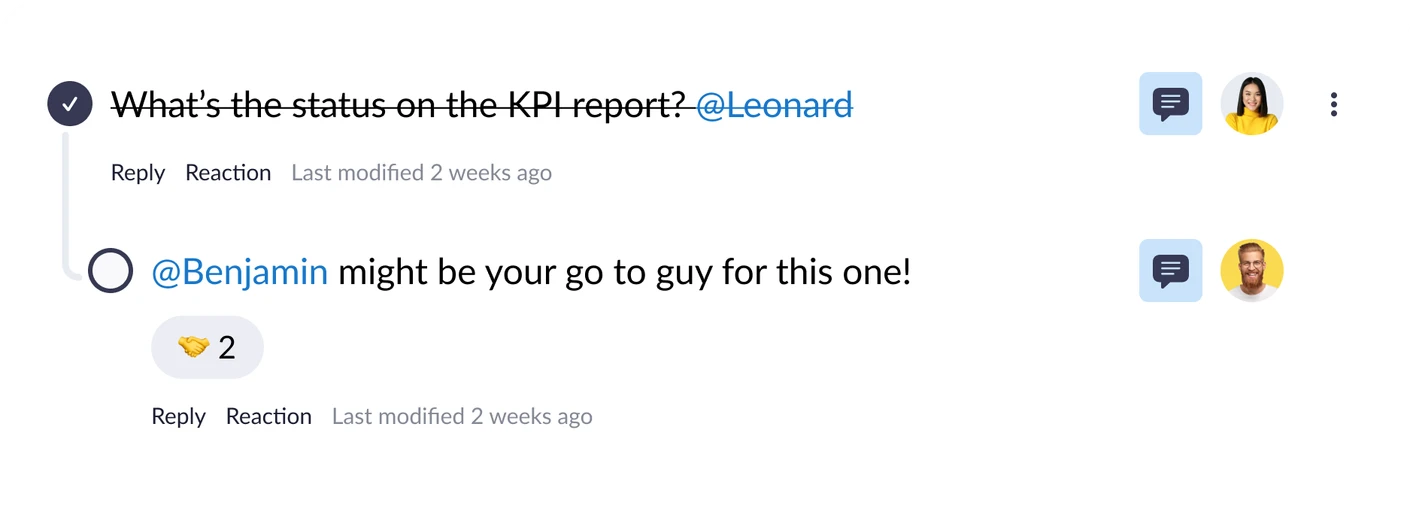
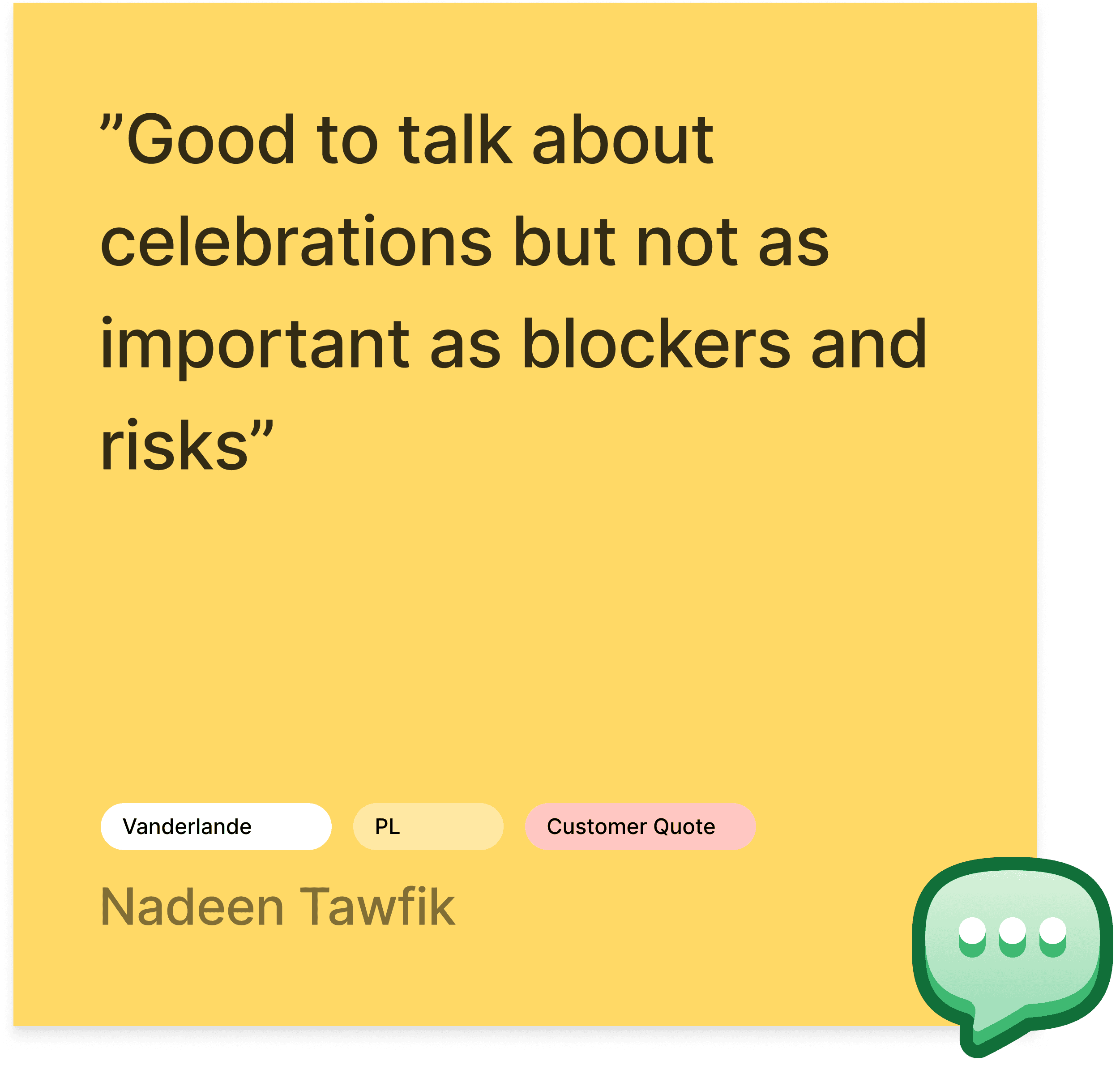
Reactions: lightweight ways for managers to acknowledge or celebrate progress.